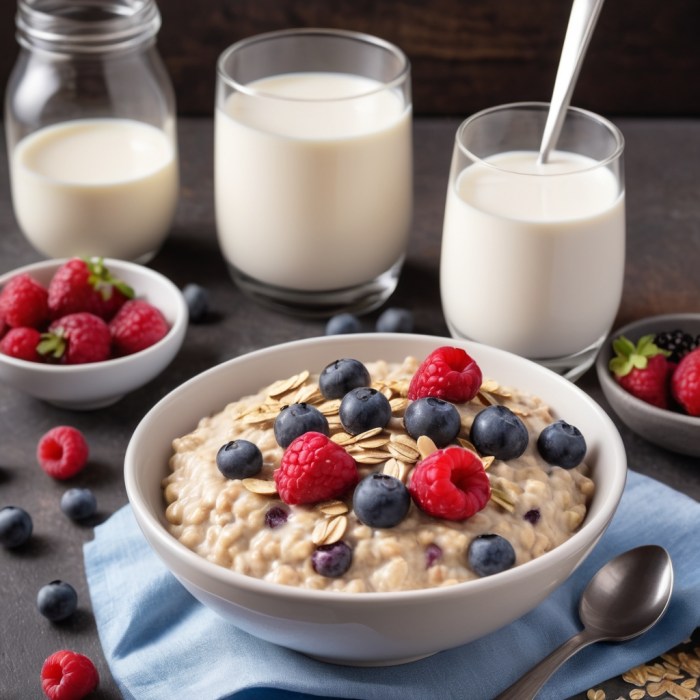
Oatmeal bowl

Simple Recipe Ideas for Young Footballers


Breakfast: Power Oatmeal Bowl

  • Cook oats with milk or water
  • Top with sliced banana, a handful of almonds, and a drizzle of honey
  • Optional: add chia seeds or a spoonful of natural peanut butter Lunch: Chicken & Quinoa Salad
  • Grilled chicken breast (seasoned lightly)
  • Cooked quinoa mixed with cherry tomatoes, cucumber, and spinach
  • Dress with olive oil and lemon juice Snack: Energy Balls
  • Mix rolled oats, nut butter, honey, and dark chocolate chips
  • Roll into bite-sized balls and refrigerate for 30 min Dinner: Baked Salmon with Sweet Potato & Veggies
  • Bake salmon fillet with lemon and herbs
  • Roast sweet potato cubes with olive oil

– Steam broccoli or green beans on the side

3. Tips for Meal Prep and Staying Consistent

  • Dedicate one or two days per week for meal prep to save time on busy days.
  • Prepare snacks in advance to avoid reaching for unhealthy options.
  • Encourage family involvement: cooking together can make healthy eating enjoyable.

– Keep a water bottle handy at all times. Hydration is as important as food.

4. Quick Hydration Tips

  • Start your day with a glass of water to kickstart metabolism.
  • Sip water throughout the day rather than drinking large amounts only at once.
  • During training or matches, drink small amounts every 15-20 minutes if possible.

– Avoid excessive sugary sports drinks; choose natural or low-sugar options instead.

Healthy Shopping List for Young Footballers

Healthy Shopping List for Young Footballers


Carbohydrates

  • Whole grain bread, pasta, and rice
  • Oats and cereals (low sugar)
  • Sweet potatoes and regular potatoes
  • Fresh fruits (bananas, apples, berries, oranges) Proteins
  • Lean chicken breast and turkey
  • Fresh fish (salmon, tuna)
  • Eggs
  • Greek yogurt and cottage cheese
  • Beans, lentils, chickpeas
  • Nuts and seeds Healthy Fats
  • Avocados
  • Olive oil
  • Nuts (almonds, walnuts) and nut butters
  • Seeds (chia, flaxseed)
  • Fatty fish (salmon, mackerel) Snacks
  • Fresh fruit
  • Yogurt (low sugar)
  • Natural granola bars or homemade energy bites
  • Mixed nuts (unsalted) Hydration
  • Water (main drink)

– Low-sugar electrolyte drinks (for intense training days)

2. Simple Recipe Ideas for Young Footballers

Breakfast: Power Oatmeal Bowl

  • Cook oats with milk or water
  • Top with sliced banana, a handful of almonds, and a drizzle of honey
  • Optional: add chia seeds or a spoonful of natural peanut butter Lunch: Chicken & Quinoa Salad
  • Grilled chicken breast (seasoned lightly)
  • Cooked quinoa mixed with cherry tomatoes, cucumber, and spinach
  • Dress with olive oil and lemon juice Snack: Energy Balls
  • Mix rolled oats, nut butter, honey, and dark chocolate chips
  • Roll into bite-sized balls and refrigerate for 30 min Dinner: Baked Salmon with Sweet Potato & Veggies
  • Bake salmon fillet with lemon and herbs
  • Roast sweet potato cubes with olive oil

– Steam broccoli or green beans on the side

3. Tips for Meal Prep and Staying Consistent

  • Dedicate one or two days per week for meal prep to save time on busy days.
  • Prepare snacks in advance to avoid reaching for unhealthy options.
  • Encourage family involvement: cooking together can make healthy eating enjoyable.

– Keep a water bottle handy at all times. Hydration is as important as food.

4. Quick Hydration Tips

  • Start your day with a glass of water to kickstart metabolism.
  • Sip water throughout the day rather than drinking large amounts only at once.
  • During training or matches, drink small amounts every 15-20 minutes if possible.

– Avoid excessive sugary sports drinks; choose natural or low-sugar options instead.

Breakfast

Nutrition Essentials for Young Footballers


Introduction

Fueling your body for peak performance and healthy development

1. Eat Balanced Meals

A well-rounded diet includes a good mix of:

  • Carbohydrates: Your main source of energy. Focus on whole grains like brown rice, whole wheat bread, oats, and potatoes.
    • Proteins: Important for muscle repair and growth. Include lean meats, poultry, fish, eggs, dairy, beans, and nuts.
  • Fats: Needed for long-lasting energy and cell functions. Choose healthy fats from avocados, nuts, seeds, olive oil, and fatty fish.

2. Stay Hydrated

Water is critical for performance and recovery.

  • Drink water regularly throughout the day, not just during training.
  • Avoid sugary drinks that can cause energy crashes.
  • On intense training or match days, consider electrolyte drinks but choose low-sugar options.

3. Pre-Training and Match Meals

Eat a meal rich in carbohydrates and moderate in protein about 3–4 hours before playing. For example:

  • Whole grain pasta with tomato sauce and chicken
  • Brown rice with vegetables and lean beef
  • A sandwich with turkey and salad If you need a snack closer to kickoff (about 30–60 minutes prior), opt for something light and easy to digest like a banana, yogurt, or a small granola bar.

4. Post-Training and Recovery Nutrition

Recovery meals help your muscles repair and replenish energy stores:

  • Eat within 30–60 minutes after training or matches.
  • Include carbs plus protein, e.g., chocolate milk, a turkey sandwich, or a smoothie with fruit and yogurt.
  • Continue hydrating well.

5. Don’t Skip Breakfast

Starting your day with a nutritious breakfast fuels morning training sessions and school:

  • Examples: oatmeal with fruit, eggs on whole-grain toast, or a fruit smoothie with nuts.

6. Limit Junk Food and Sugary Snacks

While treats are fine occasionally, try to minimize:

  • Sugary sodas and candies
  • Deep-fried snacks and fast food
  • Excessive processed foods high in salt and unhealthy fats
    These can negatively impact your energy, focus, and overall health.

7. Listen to Your Body

Everyone’s nutritional needs vary depending on age, size, training intensity, and metabolism. Pay attention to how food makes you feel and perform, and adjust accordingly.

Sample Daily Meal Plan for a Young Footballer

MealFoods to Include
BreakfastOatmeal with berries and a glass of milk
Mid-Morning SnackApple and a handful of almonds
LunchGrilled chicken wrap with salad and quinoa
Afternoon SnackYogurt with honey and banana
DinnerBaked salmon, sweet potato, steamed broccoli

| Evening Snack | Cottage cheese or mixed nuts |

Final Tips

  • Prepare meals ahead of time to avoid missing nutrients.
  • Involve your family in planning and cooking balanced meals.

– Speak to a nutritionist or dietitian if you have specific dietary needs or concerns.

About Football Focus

At Football Focus, we support young talents through every aspect of their journey — and that includes promoting healthy habits like proper nutrition to enhance performance and wellbeing. Remember, fueling your body right is a winning strategy on and off the pitc

First Trial

How to Prepare for Your First Trial


A complete checklist and practical tips for young players to confidently get ready for football club trials, including physical prep, mindset, and what to bring.

How to Prepare for Your First Trial Your first trial with a football club is an exciting opportunity—and a crucial step toward turning your passion into a professional career. It’s natural to feel a mix of excitement and nerves, but with the right preparation, you can show the best version of yourself on the pitch. Here’s a practical checklist and some helpful tips to make sure you’re ready for this important day.

1. Get Physically Prepared

  • Training: In the weeks leading up to your trial, focus on consistent fitness and skill training. Incorporate endurance runs, sprint drills, ball control exercises and position-specific practice.
  • Rest: Avoid overtraining right before the trial. Ensure you get plenty of sleep, especially the night before, so your body and mind are fresh.
  • Hydration and Nutrition: Stay well-hydrated and eat balanced meals rich in proteins, carbohydrates, and healthy fats to fuel your performance.

2. Pack Your Gear

Bring everything you might need, including:

  • Appropriate football boots (make sure they fit well and are clean)
  • Comfortable training clothes and shin guards
  • Water bottle
  • Towel
  • Any paperwork requested by the club (such as medical forms or ID)
  • Snacks for energy boosts during breaks

3. Understand the Trial Format

Find out as much as you can about what to expect:

  • Will there be fitness tests? Small-sided games? Full matches?
  • How many players will participate?
  • Who will be coaching or scouting? Understanding this helps reduce surprises and allows you to mentally prepare for the format.

4. Prepare Mentally and Emotionally

  • Confidence: Believe in your skills and hard work. Remind yourself why you love the game.
  • Focus: Concentrate on playing your best rather than worrying about the outcome.
  • Positive Attitude: Coaches look for players who demonstrate teamwork, coachability, and a strong work ethic as much as technical skill.

5. Logistics and Timing

  • Arrive early to warm up properly and acclimate to the environment.
  • Plan your route in advance, considering traffic or public transport schedules.
  • Have a backup plan to avoid stress from unexpected delays.

6. After the Trial

  • Regardless of the result, reflect on your performance: What went well? What can you improve?
  • Ask for feedback if possible, it’s invaluable for growth.

– Keep training and seeking opportunities to showcase your talent.

Final Thoughts Remember, the first trial is just the beginning of your journey. Every experience teaches you something new and brings you closer to your goals. At Football Focus, we are here to support and guide you through every stage of your career, helping you prepare not only for trials but for long-term success on and off the pitch.

Good luck – go show them what you’ve got!

Find Out How Successful People Think So You May Be Successful Too


Expert Author Hani Al-Qasem

Do you think successful people are just plain lucky?

Successful people did not become successful because they were lucky.

They did not achieve success by accident. Being at the right place at the right time, meeting relevant people, reading the appropriate book, did not come about accidentally or by luck.

Luck is brought about by Labour Under Correct Knowledge.

Successful people prepared themselves. Instead of giving up on anything they started and wanted to achieve they got stronger by learning more.

Success is a methodical, orderly and deliberate process of deciding what you want to do with your life, what are the steps that you need to undertake to get you there, and lastly what you will do once you get there.

One of the most important aspects, if not the most important aspect to success, is the ability to visualise your successful outcome and stay focused on it until you achieve it.

“Imagination is more important than knowledge, knowledge is limited.” – Albert Einstein

Successful people understood the potential power behind knowledge, yet they also understood that, for them to close the gap between where they are and where they wanted to be, they would have to piece together the enigma that is most often referred to as “life”.

They had to build a picture, a vision, of success in their mind, and then go about taking action on creating that envisioned life.

In much the same way, you have to be serious about your present and future, you need to have the knowledge that is required so you, too, may close the gap: you need to be and remain determined to devote yourself to taking massive action to build your business of succeeding in life.

You, too, will need to see the end, your dream and destiny that you desire in your mind’s eye. It is up to you to take the necessary and relevant action to make it all happen. It’s just like going to the doctor with a particular health problem.

The doctor may prescribe a medication for you to take four times a day, yet he cannot be there with you to ensure that you are taking the medication.

It comes back to deciding to be responsible for your life.

Have you noticed how it all stems from that one attitude? Being responsible for your own life.

Your success, your being responsible 100% for you to live your dream life starts here.

When you accept 100% responsibility for yourself and your current life situation, you will have the power to move towards those things you truly desire in life: which is success in all areas of your life.

This life-changing article is about possibilities and opportunities, knowledge and tools. It will help expose your unique course in life.

It will inspire, support and motivate you to excel, to do what successful people do, to have all that successful people have, and to become a shining example of a successful person.

Here, you’re not being told what you couldn’t do, instead you are being told to shoot for the stars. And above all, you are being shown how to shoot for those stars.

“A person is what he thinks about all day long.” – Emerson

Interesting thought, wouldn’t you think? So much so, it’s worth repeating: “A person is what he thinks about all day long.”

Success and happiness cannot happen if you possess the same old thoughts and beliefs.

If you do not change your mind, if you do not get rid of the unsupportive thoughts and beliefs, you will inevitably remain stuck in your old ways. Not much, if anything, will change.

Let’s give you a quick overview on how change comes about:

Your BEHAVIOUR, how you act (or perhaps do not act), controls your success or failure. Your ability to attain high levels of success is dependent upon your actions and behaviours. Your results are the outcome of your behaviour. Now let’s consider where your behaviours come from and what controls them?

Your FEELINGS command your behaviour. Every action that you take is first filtered through your feelings that reside in your subconscious mind. How you feel about something determines what you do and how well you do it. So where do your feelings come from?

Your ATTITUDES create and influence your feelings. Your attitude is your perspective from which you view life. Whatever attitude you have about anything will affect how you feel, which, in turn, affects how you act. Where do your attitudes come from?

Your BELIEFS create, control and influence your attitudes. What you believe about anything will determine your attitude about it, which will create your feelings, and then which will direct your behaviour and action. Belief patterns are so powerful that two people who are in the same situation could perceive things completely differently. It only requires us to believe what we see and how we see it. We all have thousands of beliefs – big and small. And where do your beliefs come from?

Your THOUGHTS create, control and influence your beliefs. Your thoughts are real and are immensely powerful. Everything you accept from the outside world and everything you feed yourself from within is a product of your thoughts. Everything starts as a thought.

So, it goes without saying you need to learn to control your thoughts. And when you do, you will automatically control your beliefs, your attitudes, your feelings and, consequently, your behaviour and actions.

The big secret to success:

Learn to control your thoughts and you will influence your behaviours and actions. It’s all a mind-set. That’s what we’ve been saying all along.

Success is predictable and is not achieved by accident.

Have the mind-set of the successful people and you will achieve success. Believe and it is yours!

“There is a great future in front of you, you can leave your past behind.” – Joel Osteen

Science of success experts have concluded that the brain is a goal-setting organism.

That is fantastic news for us: for whatever goal we give to our subconscious mind, it will work for us day and night, 24/7, to achieve it for us; to make it a reality.

The principal breakthrough that scientists made was that we do not need to waste our precious time and effort trying to change old thoughts and behaviours: we just simply create new ones.

And the other discovery they made was that we can continue to create new thoughts, new memories, new behaviours, new skills, and learn new things for as long as we are alive on this earth.

Now, with the new discoveries in recent years, it has been scientifically proven that our capacity to achieve and succeed literally has no limits.

Our brain has the capacity to continually learn during our entire lifetime.

Our brain can form new thoughts, can have new memories, and can learn new things by the millions, no matter what your age is. By the millions.

That’s how many new things we can learn, that’s how many new skills we can learn, that’s how many new thoughts we can have, that’s how many new behaviours we can adopt.

This is encouraging because there is no limit on your capacity to achieve new things.

No limits whatsoever for the human brain to learn, memorise, develop, achieve and perform at higher levels than ever imagined. It makes no difference what your age is: you are capable of learning anything new that you want to learn.

That adds to what we spoke of earlier: no more excuses.

“The future belongs to those who prepare for it today.” – Malcolm X

Your brain has the capacity to achieve way beyond what was ever thought possible. So now is the time to break out of your limited thinking and start dreaming big and imagining unlimited possibilities.

Becoming successful is not impossible.

It is a choice you make through a decision. Every day, step-by-step, you may climb the mountain of success if you’ve decided to do so, if you’re committed to accomplish what the others think impossible.

Design your future now.

Prepare to receive what you desire.

Thanks to the phenomenal advances made in cognitive science and the development of NLP (Neuro-Linguistic Programming), personal change, personal transformation, has come a very long way.

In fact, personal growth is no longer a mystery.

NLP has brought to light that change, transformation and growth can be fast, reliable, and even fun. It has shown us that we do not need to spend thousands of hours slaving away to increase our creative-thinking abilities.

By practicing a few simple exercises and applications, you can start your creative juices flowing, and you may even amaze yourself at the quality and quantity of good ideas that you can come up with to expedite your success.

It can allow you to achieve something you seek within days and months as opposed to years and decades. That’s the power of the progress science has made on how the brain works, and also how you can have your mind to be your best ally in achieving anything you want.

Learn to live as you like by no longer living as you dislike.

Are you ready to get on the road to success and fulfilment?

Bear in mind, much like everything else in life, success requires practice and massive, consistent action.

“Success doesn’t mean the absence of failures; it means the attainment of ultimate objectives. It means winning the war, not every battle.” – Edwin C Bliss

by: Hani Al-Qasem

What Does The Pattern Mean On A Foot Ball?


Most teams have a football pattern that any real fan will spot within a glimpse of an eye. However, if you have no football experience it is almost impossible to identify similarities in game structure and the way the players move, pass the balls, dribble and try to score.

According to experts the football pattern results from quality training and analytical thinking. When a player masters the technique and uses personal experience or knowledge on the field, the benefits extend to the entire team. Moreover, the foot ball pattern is not something performed individually, since it involves lots of ability and unity in the football formation.

The way the team colleagues work together is developed during trainings, and the coach has the great responsibility of making trainees learn the pattern and respond to it properly according to the individual position assignment. The real mastery of the football pattern comes in time and involves a constant evolution. Thus, competing teams often study the opponents’ strategies to understand where the strength or the weakness comes from, where the attack is at its highest or where it lacks in intensity. The entire team has a contribution to the making of the football pattern as it is not the merit of one individual alone.
football pattern.jpg

An amateurish player face difficulties in developing a real football pattern, but for hobby playing it is not even important to have great skills. Most of the time players stick to a certain way of moving on the field and do little in the direction of changing something in their play. This can sometimes be a problem for the success on the field, but since we are not talking about professional achievements, things are definitely not very pressing. Therefore, the foot- ball pattern is not an objective in itself when playing for sheer personal pleasure.

All in all, the football pattern remains a major attribute of team playing particularly in professional leagues and championships. Although not easy to identify and characterize by an untrained eye, it is an inherent part of the training standards specific to every team. Any coach will do his/her best to make all the players contribute to the creation of a good football pattern that can win goals or points and bring the success of the team. Yet, sometimes, changes in the football pattern are necessary particularly when the results are not the expected ones.