Tag: football
Spanish Football Academies: Preparing for International Football Training
Spanish football academies have a very unique style of training that focuses on technical skills & speed and not sheer strength and endurance.
For smaller football players who have a lot of speed, a Spanish international football academy might be perfect for you. Here’s what to expect from Spanish football training.
Football academy training: speed vs. Strength
For football academies in Spain, precision and speed are a lot more important than power. For technical players whose greatest strengths are their speed and ball control, not their size, Spain football academies are the perfect place to hone their skills.
Unlike British football, which demands a strong upper body and a larger size because it’s so physical, Spanish football is all about speed and precision. (Take a look at the Spanish national team. Many of the players are small, around 74 and 77 kg.)
Spanish football academy focus: team tactics
Training in Spain is very team-oriented and tactical. It’s important for players to be aware of their surroundings and know where teammates are on the field. The Spanish football style focuses more on short, precise passes to your teammates and not long hopeful passes into space down the field.
Being able to control the ball, and pass fast is crucial in Spain. If you don’t have good control and can’t pass well, the opposition will be on top of you every time, and you won’t be able to adapt well.
Spanish football academy focus: technical excellence
Spanish football has a very technical focus: being able to control the ball perfectly, pass perfectly, and to shoot as well as possible. Spanish football academies focus on good control of the ball, and using both feet equally well.

Movements have to be quick, and players have to learn how to move the ball fast. In Spanish football, the ball is your friend. Players learn how to take care of the way that they strike the ball!
The most important thing: love of the game
For players considering a Spanish international football academy, one thing is most important: a love of the game. According to Nacho Mallo, players with a passion for football are the ones who are going to improve the most.
“All that passion they have, they’ll find a way to express it here,” Mallo said. “We care about all the technical things, so it’s a good place for anyone who’s a more technical player. They will enjoy Spanish football.”
Are you a player who’s all about speed and precision? Then training at a Spanish international football academy could be just right for you.
Author: Joey Bilotta
Developing Europa League predictions – The ultimate betting experience!
The Europa league is one of the most respected and popular football leagues, an annual event that brings in the same competition some of the best European football clubs to fight for the appealing trophy. The interesting part is that this is a very popular championship not only among people living in Europe, but for football fans worldwide. To that extent, this has become a hugely favored market for millions of sports betting enthusiasts who are committed to enjoy an exciting form of entertainment and make good profits at the same time. Developing Europa League predictions has been for some time now a very profitable activity for professional punters and industry insiders, but it seems that the number of football fans interested in this activity has doubled over the recent years.

Although developing Europa League predictions is an increasingly popular activity, being successful is pretty hard. This requires more than general knowledge about betting predictions and some tips, as it happens when you try to create a sustainable betting strategy. If you are novice at online betting, you should stay away from this activity. First and foremost, you should focus on finding excellent bet tips and use them to improve your betting skills and instead of making predictions, you can find a trustworthy online platforms that offers free picks with the click of a button. In fact, this is the foundation of a profitable betting experience and the chance to cut the risks to a minimum and make the most of the range of online betting opportunities available.
If you understand football as a betting market, you are probably aware that developing Europe League predictions is quite difficult, mainly because there is so much information that one must put in few words. It is well-known that this football competition makes a difference in the world of football because it is the second competition organized by ruling European football authorities in terms of glamour and important, after Champions League. If you have a basic idea about what this tournament is about then you probably know right betting predictions should rely on a series of variables, especially huge amounts of historical data.
There are over 190 clubs who would have been in the competition at one stage or another at the end of it. And it is quite obvious that giving more teams a taste of European action can only help promote great football and participation in the future. The competition is fierce and punters are jumping right in the middle of action, ready to explore the range of opportunities available. And they are armed with more that bet tips and guides! They have excellent strategies and money management systems and most of them also use automatically generated betting predictions. This boost the chances of winning because they are provided by a special software that analyzes impressive amounts of data in almost no time. On the other hand, betting predictions provided by tipsters are also very sought-after, as long as the source is credible. Whatever type you prefer, you should first do a bit of research to find an online platform that enjoys a great reputation among professional punters and industry insiders, for this will definitely help you protect your winnings.
Author: Fabiola Groshan
History of Football Uniform
The origin of European Football is a hotly contested topic and the game took a professional shape in the United Kingdom in the late 18th century but a team uniform was not of the early innovations of the new sport.
A similar colored shirt or cap or scarf was worn to differentiate teams but around the 1870s, steps were taken to move soccer uniforms to what they are commonly known as today. Even then, matching shorts and socks were not considered part of the team uniform until the early 1900s. Long trousers or pantaloons were common features of early football games and the earliest version of shin guards made an appearance before shorts and socks were properly introduced.
However, as soon as the traditional top, shorts and socks uniform was established, its popularity spread like wildfire and football teams around the world were noted by their particular uniform.
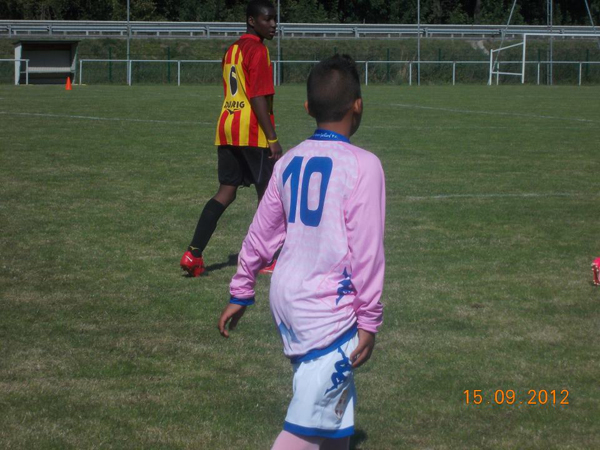
As football spread around the world with travelers and former UK citizens introducing the game to new countries, a similarity in kits grew. This has led to the familiarity between strips of teams around the world. One example would be Juventus from Italy wearing the same stripes as Notts County, black and white stripes. As time has moved on, Juventus have become far more famous around the world but at the start of the 20th century, Notts County were one of the biggest clubs in England and the world of football at the time.
With two world wars spanning the next few decades, any developments in football fashion was mainly cosmetic with the few changes focusing on moving away from a proper shirt to the style of top that is more commonly associated with the modern era of the game.
As the advent of European Cup and the rise of television, football fans around the world became more aware of teams from other nations and the different styles of kit started to create new influences. One of the most important influences came from Real Madrid, European Cup winners for the first five years. Real Madrid wore a striking all white kit, most notably copied by Leeds United who changed their blue and yellow kit, and sported a smaller pair of shorts than the baggy efforts that were common in Britain. The 1960s not only brought about a revolution in the world of music, there was a fashion change in the world of football as button collars and long shorts went out of style and circle and V-neck collars with smaller shorts.
The 1970s saw even further fashionable changes but the next revolution in football uniforms came with the selling of replica shirts and then the addition of sponsors’ logos on the kit. Football clubs realized they could make money by selling copies of their strips to fans and as televised football grew more popular, companies were eager to have their name positioned on the team kit.
Although the 1980s were memorable as the era when football shorts were at their smallest and tightest, the most important changes in football uniforms since then have revolved around the technology. Sportswear technology has allowed kit manufacturers to make uniforms that are lighter, cooler and draw sweat away from players’ bodies. All of these innovations are designed to give an edge to the top players in a sport where the slightest advantage can make all the difference.
Fashion trends and styles come and go but the demand for football uniforms has never been higher than it is today. With new technologies making the kit even lighter and more suitable to the quickening pace of the game, football uniforms will continue to keep evolving and fascinating fans the world over.
Attitude

Components of a Successful Defender in Football Training
When participating in football training, it is important to know the key components of being a successful defender. The main element of defending consists of ensuring that the opposing team does not have possession of the ball. Some defending moves all your team to gain possession of the ball, where other defending moves allow you to simply make sure that the opposing team does not have possession of the football. Below are some key components of a successful defender in football training:
The first part of successful defending in football training is the fact that you must keep a strong focus on the football throughout the game. By knowing where the ball is and what techniques to use to get the ball away from the opposing team, you can scan for opportunities to defend. This is done by considering the place of the ball, and deciding what strategy that the opposing team is using. It is important to quickly find this strategy and come up with a method that places you ahead of the moves of the opposite team.
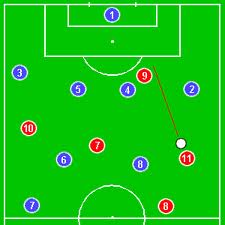
The second part of a successful defender in football training is to make sure that you are familiar with various skills and techniques. The more that you know, the better you will be at defending. It is essential to learn different dribbling and passing techniques. The main goal in defending is to keep the ball out of the control of the opposite team. Once you have ensured that the other team does not have possession of the ball any longer, you can start developing a strategic plan to keep up control of the football and score your next goal.
When defending, it is important to know many different techniques. You should make sure that you are mentally and physically capable of performing these techniques. Playing football is a physically challenging sport, and it remains true even during training. It is important to support a healthy lifestyle throughout training to be certain that you are up to the task. You will want to make sure that you are eating healthy and drinking plenty of water each day. This is a necessary part of making the most of your training and being on top of your game when it comes to defending.
In order to be a successful defender it is important that you do many drills. These drills can be as a person or as part of a group. A fine mixture of both kinds of drills is ideal. This will help train your body to successfully carry out many motions. These drills will help you to carry out numerous tactical maneuvers with ease. Once you are familiar with the tactical application of many drills and defending techniques, your football training will improve.
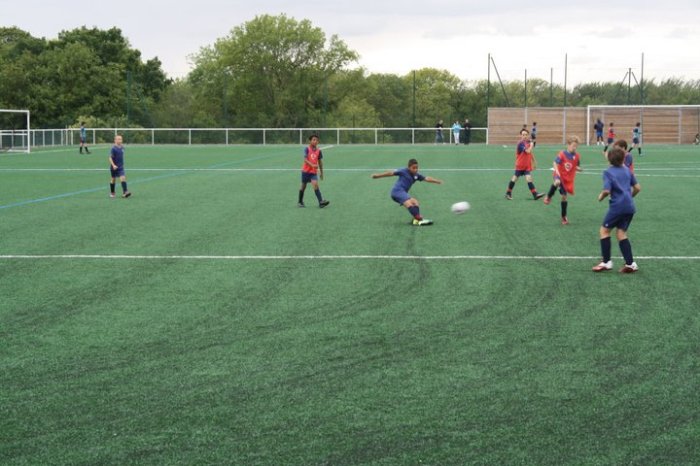
There are many things that you can do to be a successful defender. It is important to make sure that you are mixing a healthy lifestyle with other key components to maximize your potential for success.
Exploring the Benefits of Football Training for Children
As parents, we want our children to pursue healthy activities and make the right lifestyle choices. We often encourage them to become actively involved in sports and other extra curricular activities. Many children may decide to take part in a football training program that will develop them for football team play. In this article, we will take a look at the benefits of football training for children to help you decide if this choice is right for your child.
The first thing you should consider when evaluating the benefits of football training for children is the impact that it will have on their personal health and overall fitness.Football training is often physically challenging and provides a good workout to children. There are many games and activities that are introduced to children during football training that helps to work out various parts of their bodies. If a child is interested in playing on a football team, these games and activities will help to personally develop them as a player. Many skills and techniques are established during this particular type of training. This can be a fun, physical activity for children. Possibly even an experience that they will remember the rest of their lives.
The second thing that you should consider when researching the benefits of football training for children is that it can be an excellent way to help children develop a self-image that is positive. Sports training and activities help a child to realize that they have a unique set of talents and skills that they can use for the greater good of the team. They learn to understand that they are an essential part of the team, and without their unique talents and skills the entire team can suffer. They are important, and they know it. Football training can aid a child in developing this excellent self-image.
The third thing that you should consider when exploring the benefits of football training for children is that it is a great way to help a child grow socially. Children will interact with other children their age, as well as many adults such as coaches and other parents. They will learn many social obligations, such as the importance of a chain of command, being polite, being respectful, sharing, and how they are the same and different from others.
When a child engages in football training, they begin to understand the importance of being part of a team and sharing success and failures with others. In order for a child to grow as a mature and emotionally stable adult, need to that they learn how to handle stress, success, failure, and interact appropriately with others. Football training is a great way to begin all of these important lessons.
As you can see, there are many benefits to allowing a child to actively participate in football  training. Not only can it help develop the playing abilities of the child, but it can help in the emotional, social, and academic progression of the child.
 Football Focus
You must be logged in to post a comment.