Is Men’s Fashion Influenced By Football Stars?


With the commercial appeal of football dominating, if not leading the football game in many ways (the industry in general is dominated by summer tours of countries with lucrative commercial Audiences, player endorsements and corporate sponsorships), football tends to buck most commercial trends. It is no small coincidence that over 60% of Premier League Teams are now foreign-owned by successful wealthy foreign owner who will tell you what you already know – that the game’s global commercial appeal is unquestionable. But how much influence do player yield off the field?

With the game having so much commercial involvement, the players have also enjoyed rocketing salaries, thanks to image rights whenever clubs use their photo or name, commercial endorsements with private sponsors and, the customary media attention that has come with it. With that comes the consumerism that is intrinsic to the proliferation of fashion websites, magazines and the attention surrounding football stars and their lifestyles – including, of course, what they are wearing.

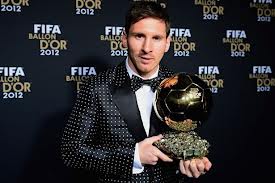
messi ballon d or
How much then, if at all, do football stars influence men’s fashion? In the case of the most famous of all sport-related clothes horses, David Beckham, whose footballing success has been at the very least, matched by commercial appeal – quite a lot. Beckham has it seems been one of the few footballers to truly influence fashion in general – let alone men’s fashion.

From his Mohawk in 2002, adopted by millions around the world, to being the first men’s sports star to adorn the cover of leading women’s magazine, Marie Claire – how much of this is down to sporting prowess? How much is down to “just being a footballer?” There are dozens, if not hundreds of famous footballers, after all. Can you honestly say that many of those influence fashion as easily?

However, in general, for footballers with considerably less ability and commercial appeal than the David Beckhams and the Cristiano Ronaldos of this world, their influence on fashion isn’t very clear. Ergo, since not every footballer has the appeal as David Beckham, it can’t surely be said that all footballers in general have a positive influence on men fashion.


Author: Shannon Holland

Spanish Football Academies: Preparing for International Football Training


Spanish football academies have a very unique style of training that focuses on technical skills & speed and not sheer strength and endurance.

For smaller football players who have a lot of speed, a Spanish international football academy might be perfect for you. Here’s what to expect from Spanish football training.

Football academy training: speed vs. Strength

For football academies in Spain, precision and speed are a lot more important than power. For technical players whose greatest strengths are their speed and ball control, not their size, Spain football academies are the perfect place to hone their skills.

Unlike British football, which demands a strong upper body and a larger size because it’s so physical, Spanish football is all about speed and precision. (Take a look at the Spanish national team. Many of the players are small, around 74 and 77 kg.)

Spanish football academy focus: team tactics

Training in Spain is very team-oriented and tactical. It’s important for players to be aware of their surroundings and know where teammates are on the field. The Spanish football style focuses more on short, precise passes to your teammates and not long hopeful passes into space down the field.

Being able to control the ball, and pass fast is crucial in Spain. If you don’t have good control and can’t pass well, the opposition will be on top of you every time, and you won’t be able to adapt well.

Spanish football academy focus: technical excellence

Spanish football has a very technical focus: being able to control the ball perfectly, pass perfectly, and to shoot as well as possible. Spanish football academies focus on good control of the ball, and using both feet equally well.

Football Fans

Movements have to be quick, and players have to learn how to move the ball fast. In Spanish football, the ball is your friend. Players learn how to take care of the way that they strike the ball!

The most important thing: love of the game

For players considering a Spanish international football academy, one thing is most important: a love of the game. According to Nacho Mallo,  players with a passion for football are the ones who are going to improve the most.

“All that passion they have, they’ll find a way to express it here,” Mallo said. “We care about all the technical things, so it’s a good place for anyone who’s a more technical player. They will enjoy Spanish football.”

Are you a player who’s all about speed and precision? Then training at a Spanish international football academy could be just right for you.


Author: Joey Bilotta


Declare Your Team Loyalty With A Football Jersey


It is a sport played by millions of people around the world. Boys and girls, men and women, from all walks of life and from nearly every nation on earth; football boasts a pool of players that is vaster and varied than possibly any other sport. Football’s appeal is understandable; not only is it a fun and exciting game to play, it is a sport that nearly anyone can play as the only thing you really need is a ball and your feet. However, that is not to say that there is not more to football than the ball, and fans and players of organized football know that the importance of football jersey cannot be understated.

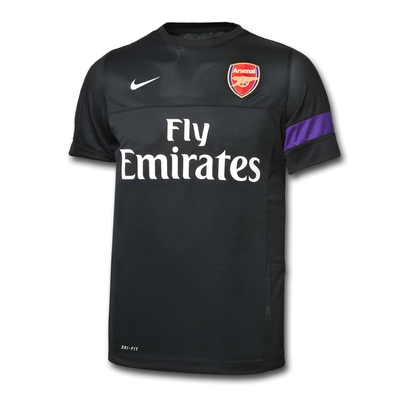
Arsenal Training Jersey A football jersey can convey the personality of your team. From the colors to your team crest or logo; your team’s football jersey is what makes the first impression on your opponents. If you are the coach or organizer of a youth team, or even a team of older and more experienced players, then selecting a jersey with the right look is an important part of your job. Online retailers and brick-and-mortar stores alike offer selections of jerseys as well as the ability to put names and numbers on the back, just like those seen on the jerseys of the professionals.

Like jerseys in other sports, fans of football also like to wear the colors and crest of their favorite teams and favorite players. The unmistakable colors and cuts of the most famous football jerseys are clearly identifiable, even from a distance, and wearing them allows fans to make a statement of loyalty to their beloved club. However, simply wearing the football jersey of your favorite team is only one way that soccer fans enjoy the thrill of wearing an official jersey. The worldwide appeal of football gives fans of the game hundreds of ways to add new jerseys to their collection.

What true football fan cannot appreciate the appeal of wearing the colors of great teams like FC Barcelona, Arsenal, PSG, AC Milan or Manchester United? And with combinations of home and away colors, as well as short and long sleeve versions, even the love of a single team can spawn a collection of several jerseys. Further, there is more to loving football than loving a single team. The various leagues around the world can make it easy to have several teams to root for, and each has their own distinctive collections of jerseys that fans will covet.

Rooting for specific teams is one way that people find themselves collecting jerseys, but rooting for favorite players might be even more popular. Wearing a football jersey with the Messi, Beckham, Zlatan, Ronaldo, are just a few names of football greats that adorn so many jerseys. And of course, let us not forget the ever popular Pele, who is still a popular choice decades after his playing career has ended.

Favorite teams and players aside, perhaps nothing catches the imagination of football fans like the World Cup. It is a time when team alliances are put aside and patriotism rules the day. With 198 nations fielding teams, and 32 of those teams making it to the last tournament, the World Cup is an event that drives football fans all over the world to buy a new football jersey that conveys their national pride.

Whether you are wearing the jersey of the team on which you play, or the jersey of the team you root for the most, using the Internet you can find a football jersey for the team, player, or colors that best define you.

Author: M. Jedediah

Why Should Children Be Encouraged To Play Football?


The benefits for young boys and girls of playing football are many and the benefits can be seen both on and off the football pitch. From fitness to social interaction and life skills football provides an unusual, but ideal, training ground for later life.

In today’s media we are constantly being reminded of a health time bomb that is about to explode as children today are not active enough.

There are so many competing distractions for our children’s attention, video games, endless channels to watch, these can all lead to Football  is the beautiful game, played by millions of young girls and boys (aged 6 to 18) across many continents, whether it’s on the beaches of Rio, the back alleys of a major city nearby or the local park, you will find someone kicking a football around.

In today’s society there has been a shift to more organized football practice for our youth players. Gone are the days of jumpers for goal posts, as streets are littered with cars and grass verges now have houses built on them.

Having a more structured approach is both a good and a bad thing; on one hand young players get structured development and education through willing volunteers who show them how everything from how to warm up correctly, develop their technical ability with the ball right through to skill development and organized small sided games to wrap everything up together to offer a total learning experience.

Today time is limited and there may be only an hour or two devoted to structured soccer practice during the week, what happens when practice is over? Getting your child to take part in an organized football school or club can bring tremendous benefits to you and your child.

Football can help increase your child’s self-esteem, which feeds their self talk which ultimately drives their performance. But football isn’t the only winner, quite often it can be seen that academic performance can increases too! Studies have shown that getting young children involved in football at an early stage promotes a real healthy attitude towards the game and this attitude continues with them into adult life.

Stage Equipe de France Chris Bonzon

The number one reason why children play football is to have fun; if football is fun and enjoyable then players will want to continue playing. This benefits their overall fitness and reduces their health risks considerably.

Soccer is made fun by coaches worldwide who willingly give up their time voluntarily to organize Youth Football practice and coach teams.

Gone are the days when football, for the really young players, was an 11 a side game with offside rules and no touches of the ball for massive periods of the game.

Youth soccer from the age of 6 to 11 is typically about having fun, playing small sided matches such as 4 v 4 with no goal keepers, promoting lots of touches of the ball and player interaction on the pitch.

Through playing football and encouraging children to take regular exercise many of the risk factors that are associated with heart disease such as obesity and diabetes can be reduced much. It is stated that childhood obesity has increased by more than 50% since 1976, which is a really scary fact.

Getting your child involved in soccer doesn’t just improve their health. We’ve mentioned already the improvements at school.

Social benefits, such as mixing with others, having to work as a team, contributing through personal effort to a collective goal, experiencing the highs and lows, picking each other up, competition, striving to be the best, aiming to win and supporting and helping others are all by products of playing football.

Many of the life skills that the players learn through football are beneficial in later life, how to form and build relationships, developing a sense of co-operation, how to lead people, how to handle adversity, what commitment means and punctuality, are all key qualities that will benefit the players in adult life.

soccer_back

If your child is already playing football, great, but what  can you do if you want to get your child involved in a local team? Here are seven must ask questions that you and your child should consider when attempting to find a suitable club…

1) What level of commitment is required in terms of practice sessions and games at the weekend?

2) When are the training sessions? When are games played, what’s the format and how much time will you need to devote?

3) How far are you willing to travel to training and to matches? Some clubs will run travel teams where distances can be much, including overnight stops.

4) What are the costs involved? Some clubs adopt a pay when you play, others a more structured approach. The most expensive clubs are not always the best, ask yourself is what you’re paying in the equal to what your child is getting out?

5) What do you and your child want out of playing football? This needs to be aligned with the prospective club’s philosophy, is it about having fun or winning?

6) How best will your child learn, develop and stay interested? Are they happy just to be involved or would they thrive in a more competitive environment?

7) What is the club’s constitution and philosophy to football, how long have they been in existence, the experience of the coaches, site, facilities etc.

Once you have considered the above questions what are your next steps to finding a suitable club or football organization for your child?

You can…

i) Get in touch with your local football association by searching the web or looking in yellow pages. They should be able to give you a list of clubs and organizations in your local area.

ii) Ask other parents/guardians about local junior and youth football teams. You’ll be surprised at how many adults or their children are involved.

iii) Encourage you children to ask their school mates where they play their football. Knowing some of the team can be a real advantage as players integrate themselves into a team.

iv) Ask your child’s form tutor or headmaster if they know of any clubs or organizations. Many clubs have formed good relationships with the schools over the years.

v) Read the local papers or local news websites you’ll be amazed at how much coverage youth and junior football gets.

These five practical steps should enable you to find a club that meets yours and your kid’s football aspirations. However, if there still isn’t a club near you that can satisfy a need why not look to set up your own team!


Author: Neil Stafford


Developing Europa League predictions – The ultimate betting experience!


The Europa league is one of the most respected and popular football leagues, an annual event that brings in the same competition some of the best European football clubs to fight for the appealing trophy. The interesting part is that this is a very popular championship not only among people living in Europe, but for football fans worldwide. To that extent, this has become a hugely favored market for millions of sports betting enthusiasts who are committed to enjoy an exciting form of entertainment and make good profits at the same time. Developing Europa League predictions has been for some time now a very profitable activity for professional punters and industry insiders, but it seems that the number of football fans interested in this activity has doubled over the recent years.

europa-league-ball-

Although developing Europa League predictions is an increasingly popular activity, being successful is pretty hard. This requires more than general knowledge about betting predictions and some tips, as it happens when you try to create a sustainable betting strategy. If you are novice at online betting, you should stay away from this activity. First and foremost, you should focus on finding excellent bet tips and use them to improve your betting skills and instead of making predictions, you can find a trustworthy online platforms that offers free picks with the click of a button. In fact, this is the foundation of a profitable betting experience and the chance to cut the risks to a minimum and make the most of the range of online betting opportunities available.

If you understand football as a betting market, you are probably aware that developing Europe League predictions is quite difficult, mainly because there is so much information that one must put in few words. It is well-known that this football competition makes a difference in the world of football because it is the second competition organized by ruling European football authorities in terms of glamour and important, after Champions League. If you have a basic idea about what this tournament is about then you probably know right betting predictions should rely on a series of variables, especially huge amounts of historical data.

There are over 190 clubs who would have been in the competition at one stage or another at the end of it. And it is quite obvious that giving more teams a taste of European action can only help promote great football and participation in the future. The competition is fierce and punters are jumping right in the middle of action, ready to explore the range of opportunities available. And they are armed with more that bet tips and guides! They have excellent strategies and money management systems and most of them also use automatically generated betting predictions. This  boost the chances of winning because they are provided by a special software that analyzes impressive amounts of data in almost no time. On the other hand, betting predictions provided by tipsters are also very sought-after, as long as the source is credible. Whatever type you prefer, you should first do a bit of research to find an online platform that enjoys a great reputation among professional punters and industry insiders, for this will definitely help you protect your winnings.


Author: Fabiola Groshan

It’s all in the number


When it comes to football, shirt numbers give away a player’s stature and importance in the team. Everything is determined by the number, even mindset and performance! After all, there’s a legacy, an inheritance attached to shirt numbers that cannot be denied. This tradition is so deeply etched in every football fan and player’s mind that wearing a number associated with past legends comes with its own set of expectations.

Football shirt numbers were once closely associated with the place one played. To the extent that positions were actually referred to by shirt number! This meant that a player’s number changed with each match, depending on which position was assigned to him on that particular day. The numbers 1 and 12 were usually kept for goalkeepers, 5 for a center midfielder, 9 for a striker, 11 for a left winger and number 10 for an attacking midfielder.
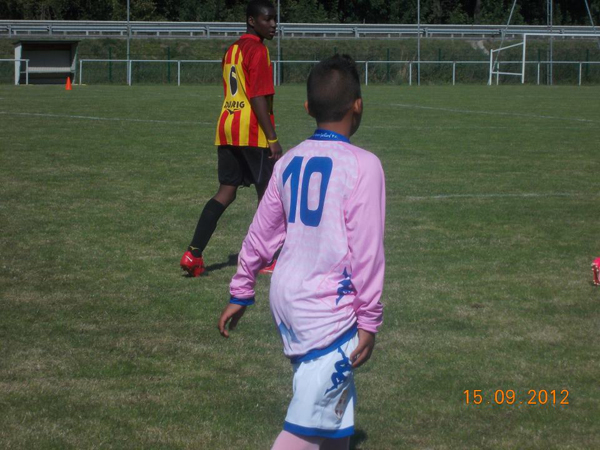
Chris Bonzon playing defender
Things changed during the 1954 World Cup when FIFA laid down the rule that teams had to use a numbering system. A specific shirt number was to be given to each player for the entire tournament but  that was then and this is now…

With the numbering system of 1 to 11 relegated to the past, on the world stage, teams usually stick to the numbers 1 to 23, though a few exceptions. At the club level, any number from 1 to 99 can be worn. So, you have random numbers at play – numbers that players consider lucky or their favorite player’s numbers worn as a mark of respect.

Players now lay claim to certain numbers and jealously guard them. Only players that seem worthy of continuing a legacy are allocated the much coveted numbers 7, 9 and 10. They have history to back them up and have become synonymous with football legends. But the biggest honor goes to the number 10, given to the most creative play maker on the field that scores the maximum goals. The number 10 football  jersey has graced the shoulders of Pele, Diego Maradona, Michel Platini, Zico, Lothar Matth¤us, Gary Lineker, Roberto Baggio, Zinedine Zidane, Michael Owen, Juan Román Riquelme, Francesco Totti, Alessandro Del Piero, Ruud Van Nistelrooy, Rivaldo, Ronaldinho, Van der Vaart, Wayne Rooney, Kaka and Lionel Messi.

Bobby Charlton, Ian Rush, Fornando Torres and Alan Shearer are famous number 9’s. More recently, the lethal Brazilian forward Ronaldo did full justice to the number 9. Iconic number 7’s are David Villa, Raul Gonzalez, Franck Ribery, Luis Figo, George Best, Eric Cantona, Juanito, Amaro, David Beckham, Cristiano Ronaldo, Bastian Schweinsteiger and Andriy Schevchenk.

Then, of course, you’ve got certain players who adopted their own unique numbers and made them their trademark. The legend Johan Cruyff took a liking to number 14 and wore it instead of the number 1 that should have been assigned to him. David Beckham chose 23 and made it the most sought out for number on the field! Recently, Ronaldinho selected number 80 based on the year of his birth.

There’s no doubt that generations to come will associate these numbers with football greats. They’ll be worn with a sense of pride, driving each player to deliver an inspired performance that does the number on his back proud.